
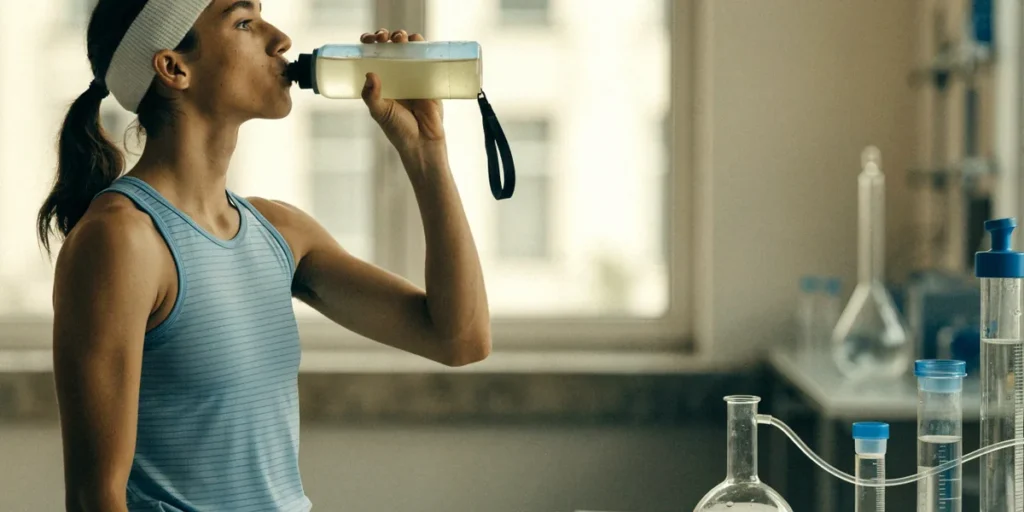
Hydration Testing for Athletes: What Our Team Actually Uses and Why
It’s 2pm on a February pre-season afternoon in Melbourne, the mercury has crawled past 38°C, and a midfielder we work with has just finished a 90-minute session. He’s lost visible weight, his urine is the colour of strong tea, and he’s complaining of a headache that no amount of sports drink seems to shift. This is the scene that made us take hydration testing seriously. Standard advice — “drink to thirst” and “have a bottle on the bench” — simply isn’t good enough for athletes who train and compete in Australian heat. Here’s what our team actually uses, what we’ve abandoned, and how we fit hydration into a broader athlete monitoring stack.
Why Hydration Testing Belongs in Your Athlete Monitoring Stack
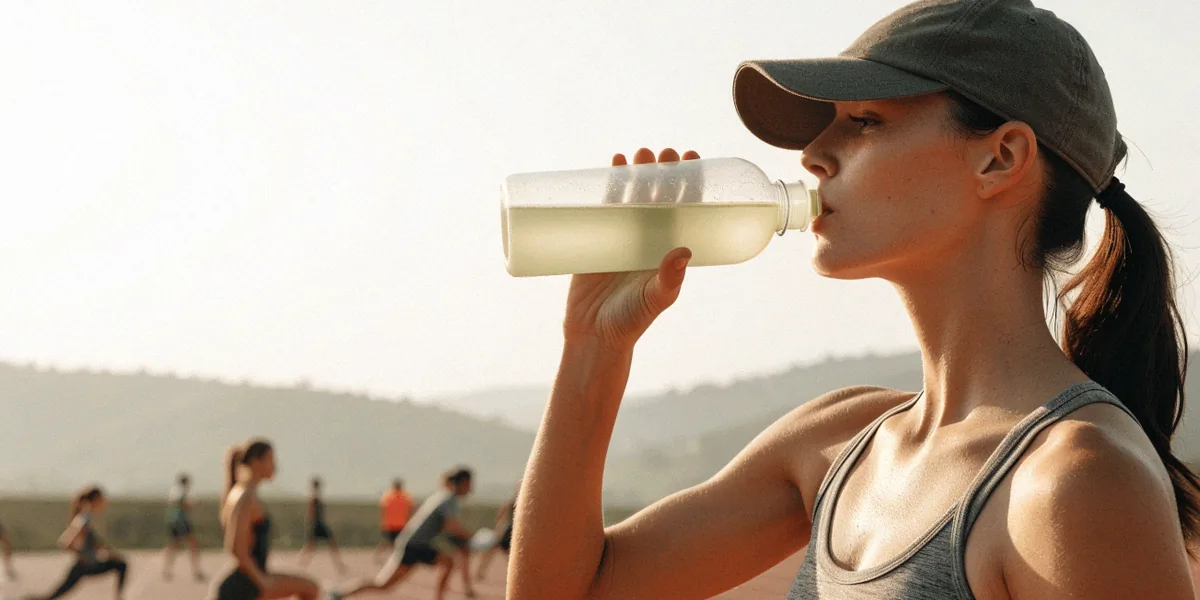
Most squads we consult with already track sleep, heart rate variability and training load. Hydration deserves equal billing. A 2% body mass loss from dehydration can measurably impair aerobic performance and cognitive function — that’s a deficit many athletes hit in a single hot session without realising it. Reaction time, decision-making and pacing judgment all degrade before an athlete consciously feels thirsty.
The Australian Institute of Sport (AIS) provides fluid replacement guidelines widely used by Australian squads, and those guidelines consistently emphasise individual assessment rather than a fixed millilitre target. That’s the philosophy we build on: measure, then prescribe.
Dehydration, Heat and Performance: The Australian Context
Australian conditions compress the margin for error. A pre-season session in Perth or Brisbane can produce sweat losses of 1.5 to 2.5 litres per hour in larger athletes. Add humidity and radiant heat, and the same athlete who copes fine in a 20°C session can be significantly dehydrated by the final quarter of a match. We treat hydration testing as a heat-acclimatisation tool as much as a performance one.
How Hydration Data Connects to Blood Markers and the Athlete Biological Passport
Dehydration can elevate haemoglobin and haematocrit, which may complicate Athlete Biological Passport interpretation if not accounted for. An athlete who arrives at a doping control session dehydrated after a hot training block can present with plasma volume changes that look suspicious on paper but are entirely physiological. We log hydration status alongside blood marker tracking so that any haematological fluctuation has context. This is one of the strongest arguments for integrating hydration data with athlete biological passport monitoring rather than treating them as separate silos.
The Main Hydration Testing Methods We Rate
There’s no single perfect method. We use a tiered approach depending on the squad’s budget and the precision required.
Body Mass Change and Sweat Rate Calculations
This is the foundation, and it costs nothing but discipline. We weigh athletes before and after training in minimal clothing, record fluid intake during the session, and calculate sweat rate:
- Nude or near-nude body mass pre-session
- Nude or near-nude body mass post-session
- Volume of fluid consumed during the session (in litres)
- Sweat rate = (pre-mass − post-mass + fluid intake) ÷ session duration in hours
A 70kg athlete who loses 1.4kg over a 90-minute session with 500ml consumed has a sweat rate of roughly 1.27 L/hour. That number drives everything else.
Urine Colour, Osmolality and Specific Gravity
Urine colour charts are cheap and useful for daily screening, but they’re crude. For anything more rigorous we use refractometers such as the Atago models to measure urine specific gravity, which correlates well with hydration status. Urine osmolality measured in a lab remains the research benchmark. We take first-morning samples where possible, since post-training samples are confounded by recent fluid intake.
Sweat Sodium and Patch-Based Testing
Sweat sodium concentration varies more than tenfold between individuals, making generic electrolyte advice unreliable. Two athletes with identical sweat rates can lose wildly different amounts of sodium, and the heavy salty sweater is the one who cramps at 70 minutes. We use patch-based testing — the Gatorade Gx Sweat Patch and MX3 Hydration Testing are the two we’ve trialled most — to get individual sodium concentrations. These patches are practical for field use and give us a number we can build a personalised electrolyte plan around.
Wearables and Tech: What Works and What’s Hype
The wearable hydration market has exploded, and we’ve tested most of it. Some tools are genuinely useful; others overpromise.
Continuous Sensors and Real-Time Feedback
The hDrop Gen 2 and the Nix Hydration Biosensor are the two we’ve spent the most time with. Both attempt to estimate fluid and electrolyte loss in real time, and both have improved with firmware updates. Garmin and Whoop integrations now pull hydration-adjacent data into broader dashboards, which is convenient for coaches who want one screen. For athletes doing long endurance sessions in remote locations, real-time feedback has genuine value.
Validation Gaps and Why We Stay Skeptical
Accuracy varies considerably between devices and between individuals. We’ve seen sensors track well for one athlete and drift badly for another on the same day. Lab-grade osmolality still sets the benchmark for research and elite programs, and we won’t replace a validated measurement with a wearable estimate for any decision that matters. Wearables are a supplement to our testing protocol, not a substitute.
Building a Hydration Testing Protocol for Your Squad
Here’s the sequence we recommend, in order.
Baseline Testing and Individual Sweat Trials
Start in the cooler months when heat stress is low and athletes can complete trials without confounding fatigue. Run at least two sweat trials per athlete across different session types — one short high-intensity, one long steady-state — to capture variability.
Personalising Fluid and Electrolyte Plans
Once you have sweat rate and sweat sodium concentration, you can build a plan. A heavy salty sweater might need 1,000mg of sodium per litre replaced; a light sweater might need 300mg. Generic sports drinks sit somewhere in the middle and serve neither athlete optimally.
Hydration at Altitude Camps and Travel
Altitude training camps at Australian locations such as Falls Creek and Thredbo increase fluid loss through higher respiration and diuresis. Athletes who are well-hydrated at sea level often arrive at camp and underestimate their needs. We increase monitoring frequency during the first five days at altitude and adjust fluid targets upward. Long-haul travel adds another layer, particularly for athletes heading to Europe or North America.
Interpreting Results: Red Flags and Common Mistakes
Data is only useful if you read it correctly. Here are the traps we see most often.
Hyponatremia and Over-Drinking Risk
Dehydration gets the headlines, but overhydration is genuinely dangerous. Drinking excessive plain water without sodium replacement can dilute blood sodium to dangerous levels — hyponatremia — which in severe cases is fatal. We never prescribe aggressive fluid replacement without matching electrolyte guidance.
Confounders: Caffeine, Alcohol and Training Load
Don’t test hydration status after caffeine or alcohol. Both distort urine concentration and body mass readings. Heavy training load also shifts baseline metrics, so we schedule testing around recovery days where possible.
When Hydration Data Mimics Doping Markers
As noted earlier, dehydration can elevate haemoglobin and haematocrit. If an athlete’s Athlete Biological Passport profile is being reviewed and hydration status isn’t documented, the interpretation can go badly wrong. We flag hydration status in every blood collection record.
Our Team’s Verdict: What We Recommend for Australian Athletes
Our opinionated take, distilled.
Budget vs Elite Setups
If you have almost no budget, start with body mass change and urine colour checks. That combination catches most problems. Add sweat sodium patch testing for heavy salty sweaters — the ones who cramp, who finish sessions with white salt stains on their kit, who feel wrecked in the heat. Treat wearables as a supplement, never a replacement.
Integrating Hydration with Blood Markers and Altitude Training
Hydration data is most powerful when it sits alongside blood marker tracking and altitude training records. A haemoglobin rise during a Falls Creek camp means something different if the athlete was dehydrated versus genuinely acclimatised. Context is everything.
FAQ
How often should we test sweat rate?
At least twice per season — once in cooler conditions and once in the heat — and again after any major change in fitness, body composition or training environment. Athletes new to a squad should be tested on arrival.
Are sweat patches accurate enough to build a plan around?
For sodium concentration, yes — they’re a reasonable field estimate and far better than guessing. We still validate against lab testing for elite athletes where the stakes are highest.
Can I just use a wearable instead of weighing athletes?
No. Wearables estimate; scales measure. We use both, but the scale data is what we trust for sweat rate calculations.
What’s the biggest mistake coaches make with hydration?
Applying one fluid plan to an entire squad. Sweat sodium concentration varies more than tenfold between individuals, so a single recommendation will be wrong for most of your athletes.
Does hydration really affect Athlete Biological Passport readings?
Yes. Dehydration can elevate haemoglobin and haematocrit, which may complicate Athlete Biological Passport interpretation if not accounted for. Always document hydration status at collection.
Hydration testing isn’t a gimmick — it’s a practical, individualised tool that belongs in the same conversation as sleep tracking and load monitoring. Australian athletes training in heat should treat it as seriously as any other sports science metric, because the performance and safety consequences of getting it wrong are real.