

How an Anti-Doping Test Works: A Step-by-Step Guide for Australian Athletes
It’s 6am and there’s a knock at the door. A stranger in a polo shirt introduces themselves as a Doping Control Officer and tells you that you’ve been selected for testing. What happens next—every word you say, every signature you give, every sample you provide—can shape your career. Knowing the process before that knock arrives is one of the most practical things you can do to protect yourself. In this guide, we walk through exactly how an anti-doping test works in Australia, from notification to final appeal, so you’re never caught off guard.
Who Runs Anti-Doping Testing in Australia?
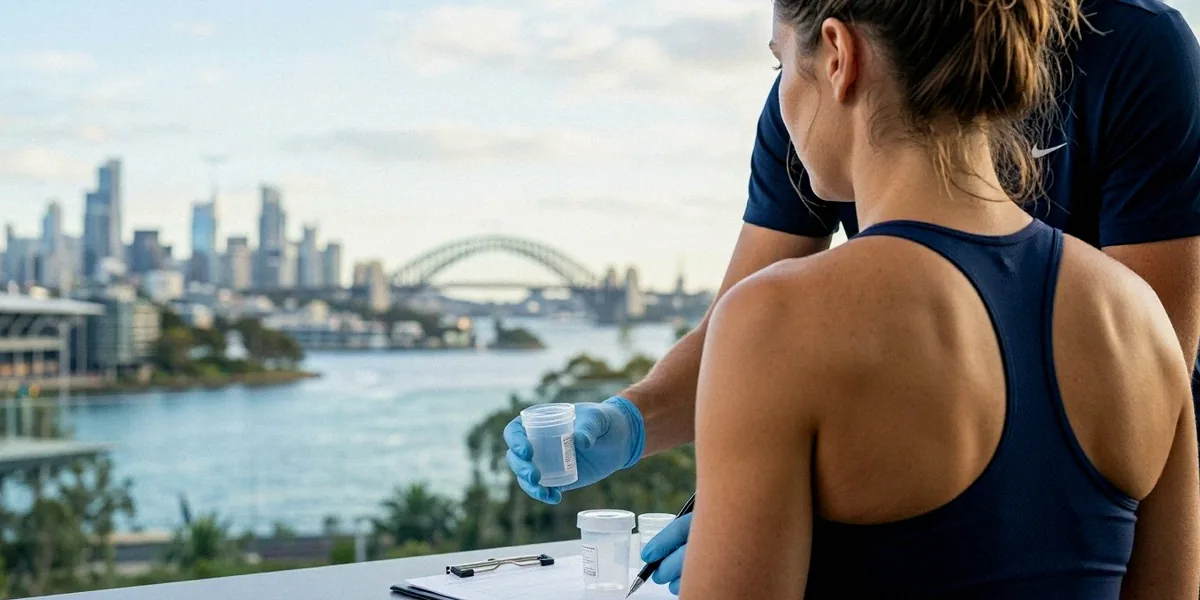
Sport Integrity Australia (SIA) is the national anti-doping organisation for this country. It replaced the Australian Sports Anti-Doping Authority (ASADA) in 2020 and now handles testing, investigations, education and results management under a single roof. SIA operates under the World Anti-Doping Code, the global rulebook that all signatories—including every major Australian sport—must follow. The Code is backed by WADA’s Prohibited List, which is updated each year and applies to substances and methods both in and out of competition.
Sport Integrity Australia vs. ASADA: What Changed?
ASADA was a single-purpose agency focused on anti-doping. When it became SIA in 2020, its remit expanded to cover broader integrity threats such as match-fixing, doping, and the manipulation of sporting competitions. For athletes, the practical difference is that SIA now coordinates with more partners—the National Integrity Framework, state bodies, and sports themselves—but the core testing and results process remains familiar. If you were tested under ASADA rules, you’ll recognise the SIA process almost line for line.
Where the Court of Arbitration for Sport Fits In
The Court of Arbitration for Sport (CAS) sits at the very top of the appeals chain. It is an independent international tribunal based in Lausanne, Switzerland, with a Sydney registry for Oceania. If a case goes all the way, CAS hears final appeals on anti-doping decisions and its awards are binding on the parties. Most matters never reach CAS, but knowing it exists matters—it’s the last word on whether a sanction stands.
Step 1: Notification and Your Rights
Testing begins with notification. A Doping Control Officer (DCO) will approach you—at training, at home, at a competition, or anywhere else—and identify themselves with official SIA credentials. From that moment, you are under observation. You cannot leave the DCO’s sight until the sample collection is complete, though you can request delays for valid reasons such as finishing a training session, attending a medical appointment, or locating a representative.
What the DCO Must Tell You
The DCO must explain, in plain language:
- That you have been selected for testing and whether it is in-competition or out-of-competition
- The type of sample required—urine, blood, or both
- Your rights and responsibilities during the process
- That you may have a representative and, where applicable, an interpreter present
- That refusing or failing to provide a sample may be treated as an anti-doping rule violation
Your Rights During Notification
You have the right to have a representative—a coach, teammate, lawyer, or anyone else you choose—accompany you, provided they don’t interfere with the process. You have the right to request additional information about the testing procedure, and to note any concerns on the doping control form. You also have the right to ask for a delay in reporting to the doping control station if you have a valid reason, though the DCO will stay with you throughout.
Step 2: Sample Collection—Urine and Blood
At the doping control station, you’ll be asked to select a sealed collection kit, verify that it’s intact, and provide your sample. For urine, you’ll be observed by a DCO of the same sex to ensure the sample genuinely comes from you. For blood, a qualified phlebotomist draws the sample, and you’ll be asked to rest beforehand. Both sample types follow strict protocols designed to keep the process defensible from start to finish.
Urine Testing: The Split Sample
Urine is collected into an A and a B bottle. The A sample is analysed first; the B sample is stored and can be tested later if you challenge a positive result. You’ll seal the bottles yourself, verify the kit numbers, and sign the doping control form. This split-sample system is a core protection—if the A sample returns an adverse finding, you can request that the B sample be tested to confirm or refute it.
Blood Testing and the Athlete Biological Passport
Blood testing isn’t just about finding a substance on a given day. It feeds the Athlete Biological Passport (ABP), which monitors blood variables over time to detect doping. Rather than flagging a single abnormal reading, the ABP looks for patterns that suggest blood manipulation—such as the use of EPO or blood transfusions. If your profile shifts in a way that can’t be explained naturally, that itself can be pursued as an anti-doping rule violation.
Step 3: What Happens to Your Sample?
Once sealed, your sample enters a documented chain of custody. Every transfer—from the DCO to the courier to the laboratory—is recorded so that the sample’s integrity can be demonstrated later. In Australia, the primary WADA-accredited facility is the Australian Sports Drug Testing Laboratory (ASDTL) in Sydney. Samples may also be sent to other WADA-accredited labs overseas depending on the analysis required.
Chain of Custody and Lab Analysis
The laboratory tests for substances and methods on the WADA Prohibited List. Modern analytical techniques can detect minute traces, and some substances remain detectable for weeks or months. The lab reports its findings to SIA, which then manages the result. If nothing is found, the matter typically closes. If something is detected, the results management process begins.
Supplement Risks: Why ‘Natural’ Isn’t Safe
Supplement risks are a major cause of positive tests in Australia due to contaminated products. Many supplements labelled “natural,” “herbal,” or “pre-workout” have been found to contain undeclared prohibited substances, either through poor manufacturing controls or deliberate adulteration. The label doesn’t protect you—strict liability means you are responsible for what’s in your body, regardless of intent. Before taking anything, check it against SIA’s supplement guidance and consider using batch-tested products only.
Step 4: Results, Sanctions, and Appeals
When a sample returns a finding, SIA follows a formal results management process. You’ll be notified, given the opportunity to respond, and—if the matter proceeds—may face a provisional suspension while the case is resolved. Sanctions range from a reprimand to a multi-year ban, depending on the substance, the circumstances, and whether the violation was intentional.
Atypical Findings and Adverse Analytical Findings
An atypical finding means the lab has detected something that requires further investigation—it may have a legitimate medical explanation, such as a Therapeutic Use Exemption (TUE). An adverse analytical finding (AAF) means a prohibited substance or method has been confirmed. The distinction matters: an atypical finding is not automatically a violation, and you’ll have the chance to provide context before any decision is made.
Appealing to the Court of Arbitration for Sport
If you disagree with a sanction, you can appeal—first through the relevant national tribunal, and ultimately to the Court of Arbitration for Sport. CAS hears final appeals on anti-doping decisions and its rulings are enforceable worldwide. Appeals must be lodged within strict timeframes, so if you’re facing a decision, get advice immediately.
Step 5: Whereabouts and Testing Pools
If you’re in a Registered Testing Pool (RTP), you must provide accurate whereabouts information so you can be located for no-notice testing. SIA uses that information, along with intelligence and risk profiling, to target testing where it’s most likely to detect doping.
Registered Testing Pool Obligations
RTP athletes must file quarterly whereabouts, including a 60-minute time slot each day when they’ll be available for testing. You must update your information whenever it changes—a missed update can count as a whereabouts failure.
Whereabouts Failures: The Three-Strike Rule
Three whereabouts failures within a 12-month period can amount to an anti-doping rule violation, even if you’ve never returned a positive sample. A failure can be a missed test, a filing failure, or a combination of both. The rule exists because unlocatable athletes can’t be tested—and that undermines the entire system.
FAQ
Can I refuse a doping control test in Australia?
Refusing or failing to provide a sample without compelling justification is itself an anti-doping rule violation and can carry the same sanctions as a positive test. If you have a genuine concern about the process, note it on the form and comply while raising the issue through proper channels.
What should I do if I’m taking a prescribed medication?
Check whether the medication contains a prohibited substance and, if so, apply for a Therapeutic Use Exemption (TUE) before you compete or train. A valid TUE provides a defence if the substance is detected. Keep records and don’t assume a prescription automatically protects you.
Are supplements really that risky?
Yes. Supplement risks are a major cause of positive tests in Australia due to contaminated products. Even products labelled “natural” can contain undeclared prohibited substances. Where possible, use batch-tested supplements and verify them against SIA’s guidance before use.
How long does a sample stay on file?
Under the WADA Code, samples can be stored and re-analysed for up to 10 years, allowing labs to apply new detection methods to older samples. This means a sample that comes back clean today could still be re-tested years later.
Who can I contact for advice?
Sport Integrity Australia provides education, resources and a confidential advice line for athletes. Your national sporting organisation can also point you to anti-doping contacts. When in doubt, ask before you take anything.
Understanding each step of the anti-doping process—from the moment a DCO knocks on your door to the final appeal at the Court of Arbitration for Sport—is your best defence against an anti-doping violation. Know your rights, manage your whereabouts, and treat supplement risks with the seriousness they deserve. Clean sport isn’t just a rulebook; it’s a career strategy.